Breast Cancer Awareness: Importance of Early Detection & Self Examination
Updated: Feb 20, 2025
Intro to Breast Cancer
Breast Cancer is the second most commonly diagnosed cancer in the world. Approximately 1 in 8 females and 1 in 667 males will be diagnosed with it before the age of 85. Every day, 58 people in Australia receive a breast cancer diagnosis, amounting to over 21,000 cases annually. Alarmingly, these numbers continue to rise, with a 24% increase in cases over the past decade.
Early detection greatly improves the chances of successful treatment, and for many people, breast cancer does not return after treatment.
Risk factors
The main risk factors include being female and age over 50
non-modifiable
female
advanced age (>50)
family history
BRCA1 or BRCA 2 mutations (more common with Ashkenazi Jewish heritage) and CHEK2)
oestrogen exposure
menarche before the age of 12
modifable
obesity
sedentary
alcohol
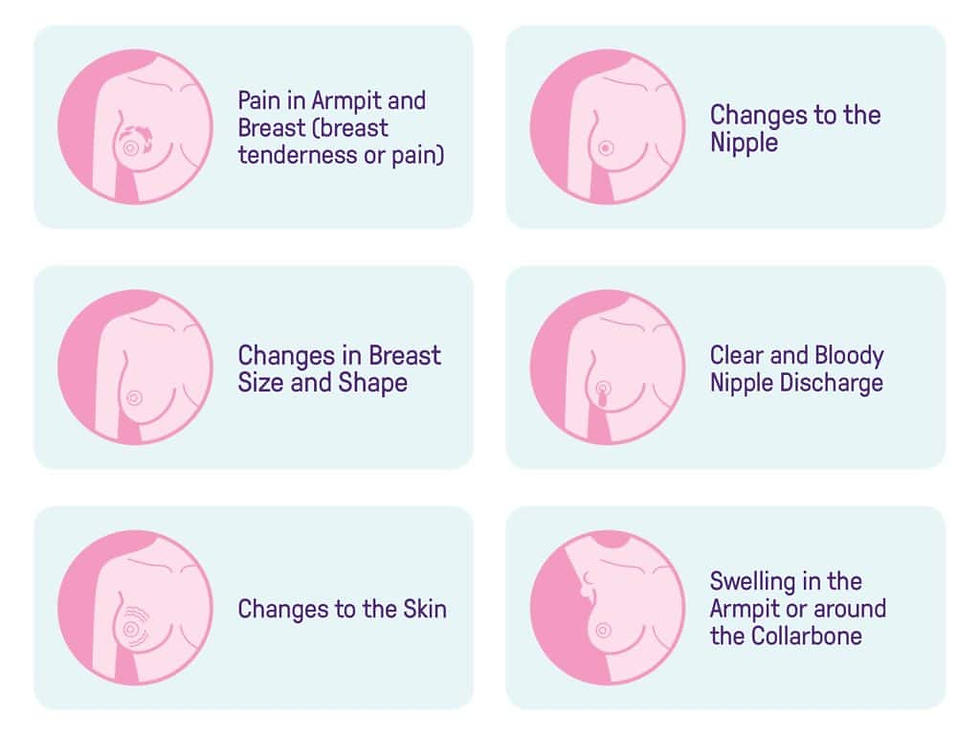
Keep an eye out for early signs of breast cancer
new lumps or swelling in the breast
thickening or dimpling of the breast tissue
changes to the skin - colour, texture or tightness
changes in the size or shape of the breast
any changes in the nipple such as discharge, inversion or sores
discomfort or swelling in the armpit
unilateral ongoing pain in the breasts a few days after your period
Always see your doctor if you have any concerns!
Breast Cancer Screening
Women aged 50-74 are encouraged to have a free mammogram every two years via BreastScreen Australia, as they account for 75% of breast cancer cases.
Women aged 40-49 can choose to access free screening mammograms through BreastScreen Australia.
Screening mammograms are less effective for women under 40 due to denser breast tissue.
Breast Self-Exams
Self-examination involves both looking and feeling for any changes in your breasts which can help you understand whats normal for you. It can be useful for early breast cancer detection but shouldn't replace regular mammograms and exams by your doctor.
When should I do a self examination?
While routine self-exams aren't always necessary, they can help identify changes. More importantly, it is best to monitor for any changes in your breasts and seek medical advice if concerned.
As a general suggestion:
Women who are still menstruating can perform a breast self-exam a few days after their period ends.
Postmenopausal women can choose a consistent date each month, such as the 1st or 15th, to perform their self-exam.
How do I do a self examination?
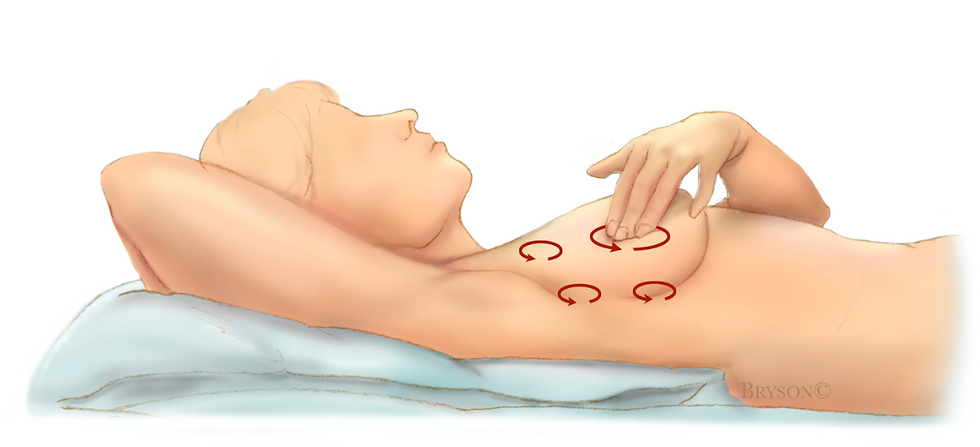
Use your right hand to examine your left breast and vice versa with a firm, smooth touch in a circular motion.
Cover the entire breast area from collarbone to below your breasts and up to the armpits. Slowly increase pressure from light to firm pressure to examine all depths of tissue
Keep an eye out for the changes mentioned above
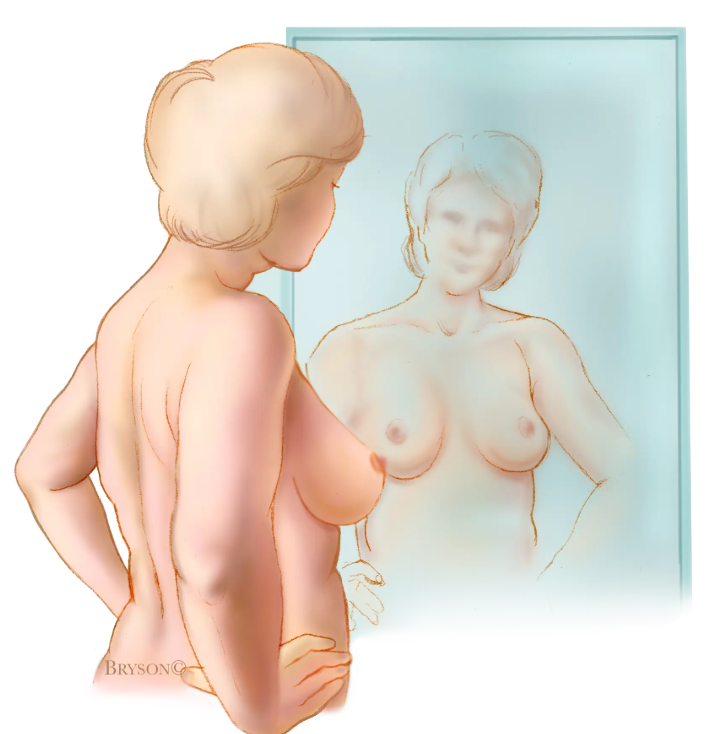
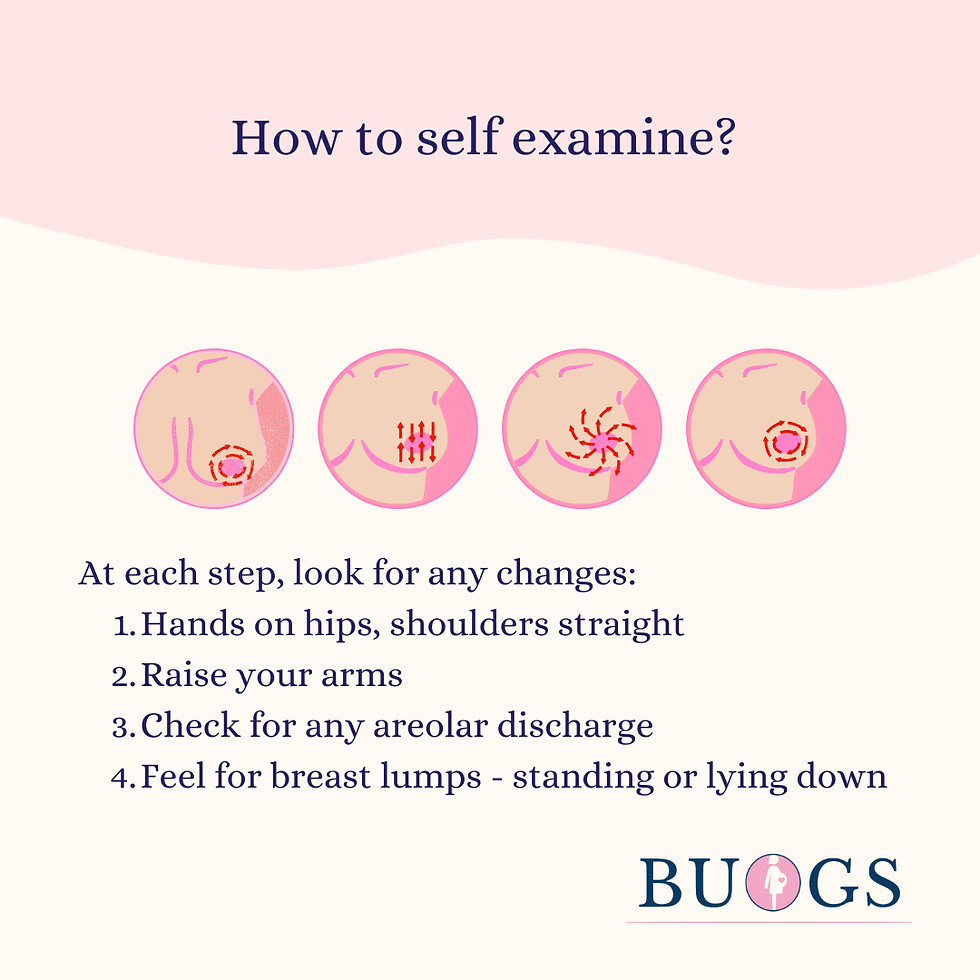
Step 1: Examine your breasts in a mirror with hands on hips.
Check that are no changes in the usual shape, size, colour of the breasts
Observe for any abnormalities such as swelling, masses, dimpling/thickening
Check for any changes in the nipple such as inversion
Check the armpit region for any swelling or lumps
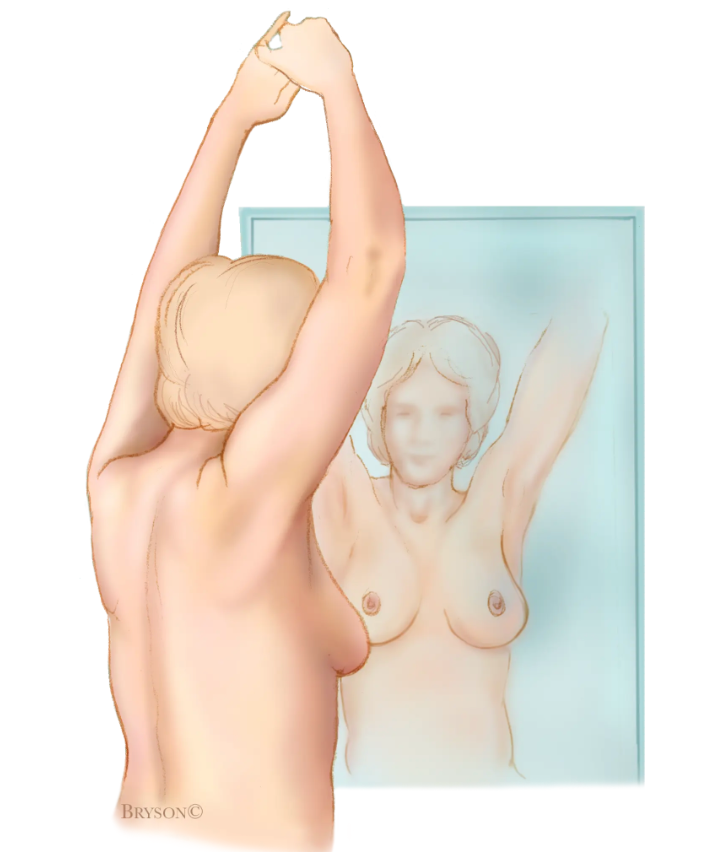
Step 2: Raise arms and look for the above changes
Step 3: Squeeze the nipple for any discharge, observe the colour and consistency (this could be yellow, bloody, watery)
Step 4: While standing up, feel for any changes in the breast tissue such as thickening, dimpling or lumps
Many women prefer to do this in can be done in the shower too
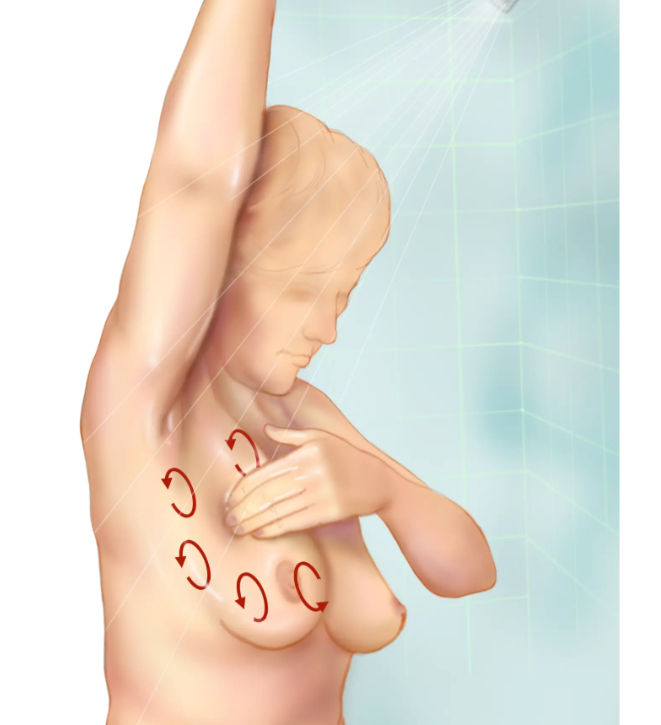
Step 5: Feel for any changes when lying or sitting down
If lying down: Place a pillow under your right shoulder, rest your right arm behind your head and use your left hand to examine your right breast. Switch sides when examining the left breast.
What should I do if I notice a change on my self-exam?
First, try not to worry. These changes are common and in most cases, are not caused by cancer.
However, it is always important to visit your doctor if you notice any changes. They may perform a physical examination and recommend further investigations, such as an ultrasound or mammogram.
How can I support those with breast cancer?
Donate, volunteer or fundraise for charities such as Breast Cancer Network Australia, Cancer Council, and the National Breast Cancer Foundation to help fund research, treatment, and patient support services
Join fundraising events such as the Mater Fun Run, Pink Ribbon Breakfast, and Australia's Breast Cancer Awareness Month activities
Support a loved one with breast cancer by helping them prepare meals, running errands or simply being there to listen
Raise Awareness by sharing information about breast cancer risks and early detection through social media or community events
For more information:

Comments